


Kaikōura Discovery Trail: The Stories Behind the Trail
Under The Sea
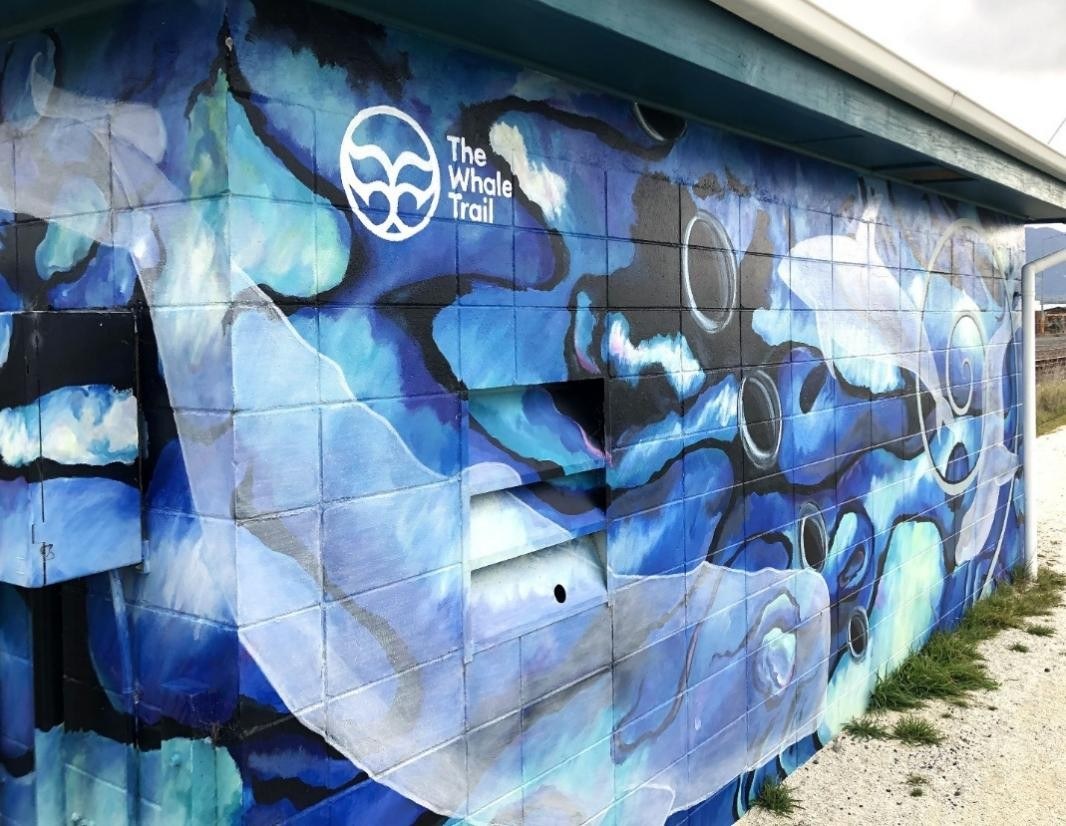
Title: Under The Sea
Type: Mural
Location: on the Whale Trail
Funded by: KiwiRail
Commissioned by: The Whale Trail
Designed by: Mae McFetrish
Created by: Mary Ashwell
Contact details for artist:atawera.art@xtra.co.nz / https://www.ataweraart.co.nz/
A vibrant mural marks the starting point of the Kaikōura Discovery Trail, setting the tone for a journey shaped by creativity, community, and the ocean. Created by local artist Mary Ashwell, the artwork transforms a small KiwiRail building on the Whale Trail, just behind Whale Watch, into a striking landmark, bringing to life a design by 15‑year‑old Mae McFetrish. Inspired by a pāua shell entwined with sea creatures, the mural celebrates the rich colours, textures, and biodiversity of Kaikōura’s marine environment, creating an eye‑catching gateway that draws visitors straight into the story of the coast.
More than just a beautiful artwork, the mural captures the spirit of Kaikōura itself—where community, culture, and nature come together. Born from a local competition and supported by sponsors, it reflects the collaborative energy behind the Whale Trail and highlights the talent within the region. As both a visual landmark and a symbol of connection, it invites visitors to pause, explore, and begin their journey with a deeper appreciation of the people, stories, and stunning natural heritage that define Kaikōura
Source: thewhaletrail.nz
Railway Earthquake Monument
Title: Railway Earthquake Monument
Type: Memorial Sculpture
Location: Kaikōura Railway Station
Commissioned by: KiwiRail
Created by: Ben Foster Sculpture
Contact details for artist:https://benfostersculpture.com/
Twisted railway track salvaged from the destruction of the November 2016 Kaikōura earthquake has been transformed into a powerful memorial to recovery, resilience and reconnection.
Commissioned by KiwiRail and created by Kaikōura artist Ben Foster, the sculpture incorporates pieces of damaged track recovered from Iron Gate, north of Kaikōura – an area Foster regularly surfed before the earthquake. Place names from along this section of the railway are incorporated into the work, connecting the sculpture to the communities and landscape through which the Main North Line travels.
The monument recognises the extraordinary effort of around 1,500 people involved in rebuilding the railway following the earthquake. The massive recovery operation worked to reconnect Kaikōura and other communities along the coast after landslides and ground movement caused extensive damage to the road and rail corridor.
The sculpture was officially unveiled by Kaikōura Mayor Winston Gray on 16 September 2017, when the first freight train travelled through Kaikōura following the earthquake.
Located at Kaikōura Railway Station, also home to Whale Watch Kaikōura, the sculpture is both a lasting reminder of the immense impact of the earthquake and a tribute to the people who worked to reconnect the coast.
Symbolic Gateway
Title: Symbolic Gateway Mural
Type: Mural
Location: West End
Commissioned by: NCTIR
Designed in collaboration with Te Rūnanga o Kaikōura
Artist: Brett Pettit
Contact details for artist:https://www.bmpettit.com/
The town's West End Rail Bridge’s colourful murals designed in collaboration with local artist, Brett Pettit, tell the story of early Kaikōura settlement.
The northern pier under the rail bridge tells the story of Rakihouia who came from Hawaiki on the canoe, Uruao. The southern pier tells the story of Rakihouia’s wife, Tapuiti. The couple were among the first to settle in the Kaikōura district with the artwork forming a symbolic gateway into the town centre.
These colourful concepts were designed in collaboration with Te Rūnanga o Kaikōura and NCTIR (North Canterbury Transport Infrastructure & Rebuild) as part of the Cultural Artwork Package you see up and down the Kaikōura Coastline.
Source: kaikoura.co.nz & Stunning cultural artwork
Sperm Whale Mural
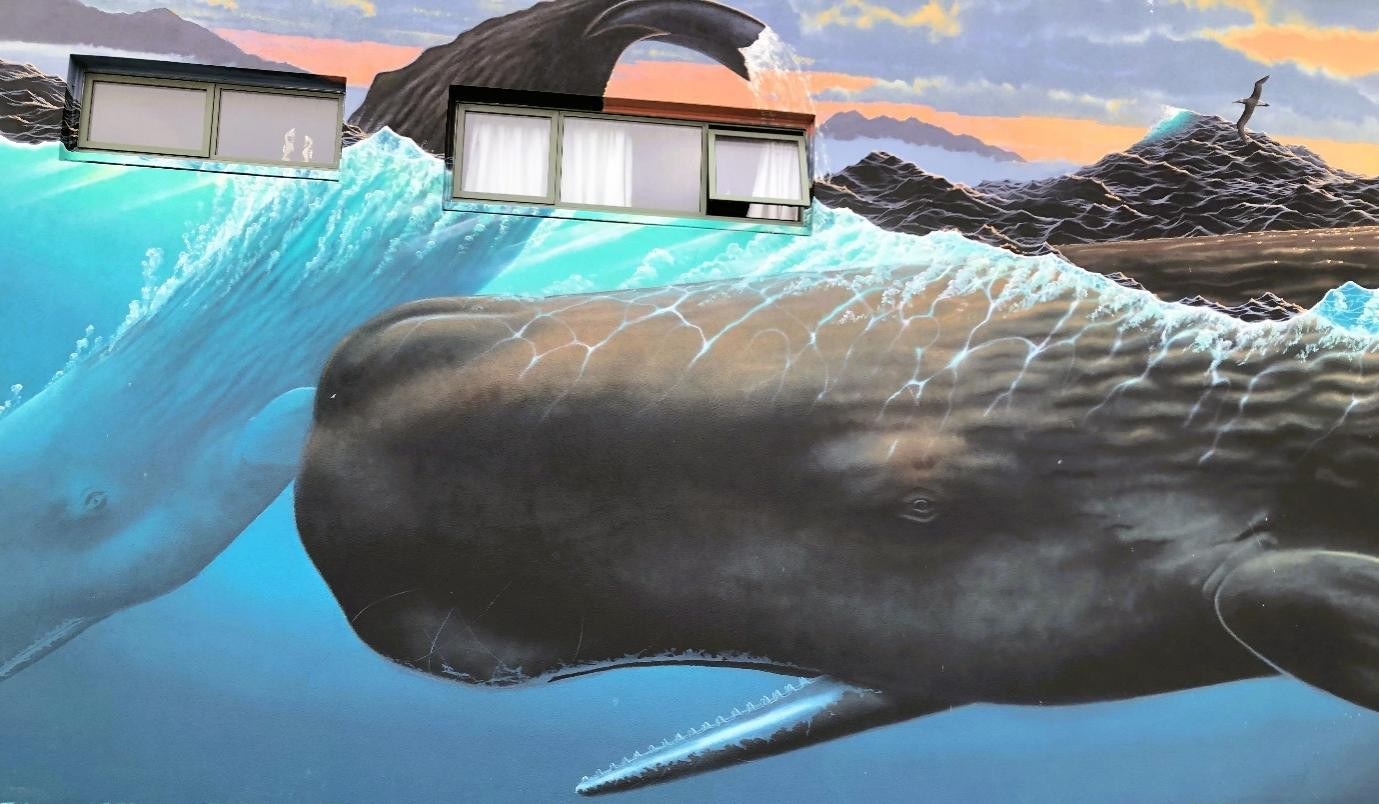
Title: Sperm Whale Mural
Type: Mural
Commissioned by: NCTIR
Artist: Brett Pettit
Contact details for artist:https://www.bmpettit.com/
This piece was created by local artist Brett Pettit more than 20 years ago. As a parting gift to Kaikōura, NCTIR (North Canterbury Transport Infrastructure Recovery) commissioned Brett to revitalise this iconic mural after the building was damaged in the earthquake.
The inclusion of whales reflects their deep connection to Kaikōura’s identity, environment and economy. Known internationally for its rich marine life and whale watching, Kaikōura’s relationship with whales is central to the town’s cultural heritage and tourism industry, symbolising both the uniqueness of the coastal environment and the community’s enduring connection to the sea.
Source: kaikoura.co.nz
Kekeno – Reflect and Protect
Title: Kekeno – Reflect and Protect
Type: Sculpture
Location: Kaikōura Amphitheatre
Artist: Ben Foster
Contact details for artist: https://benfostersculpture.com/
Kekeno follows Foster’s exploration of local wildlife and the geographical setting of her home in Kaikōura, a global marine mammal hotspot. Foster’s inspiration and enquiry stem from both a close connection to Kaikōura’s marine environment and a deep concern for indigenous species. She translates the fur seal form through a sculptural language reminiscent of the faceted, icy mountain peaks that create Kaikōura’s dramatic backdrop. The work brings together the iconic pose of the kekeno and the jagged forms of the Seaward Kaikōura Ranges. Through its highly polished, fragmented surface, viewers are encouraged to see themselves as an integral part of nature, with the reflective finish blurring the boundary between the natural and the human-made.
Kekeno were once hunted extensively for their pelts, driving the species to the brink of extinction. Historic demand for sealskins resulted in a dramatic population crash and the severe depletion of colonies throughout New Zealand. Only a few thousand individuals survived in remote locations, making fur seals functionally extinct across much of their former range.
Before human arrival, an estimated 2 to 3 million fur seals inhabited New Zealand’s coastline. Since receiving legal protection in 1978, the species has made a remarkable recovery, with the national population now estimated at more than 200,000 individuals. Although fur seals have successfully recolonised many mainland areas, they remain well below their original numbers. Today’s population represents only around 5 to 10 percent of pre-human levels, meaning the species is still on a long journey of recovery.
The first fur seal returned to Kaikōura in the 1960s. Today, the region is once again home to thriving seal colonies. Fur seals hold special significance in Kaikōura and stand as a reminder of both the area's rich biodiversity and the importance of wildlife conservation.
While fur seals are no longer on the brink of extinction, they continue to face a range of human-related threats. These include accidental capture and drowning in trawl and longline fisheries, pressure from declining fish stocks, climate change, entanglement in marine debris, dog attacks, disease, intentional harm, and human disturbance.
In Kaikōura, fur seals are an important visitor attraction. Unfortunately, resting, birthing, and nursing seals can experience significant disturbance from human activity. In recent years, local colonies have experienced periods of decline associated with high mortality rates, particularly from starvation and outbreaks of disease such as canine distemper virus.
It is hoped that the presence of this work within the community will encourage people to celebrate Kaikōura’s iconic wildlife and recognise the importance of giving these remarkable animals the space they need to thrive.
Source: Ben Foster Sculpture | Fine Art Gallery
The Shearwaters
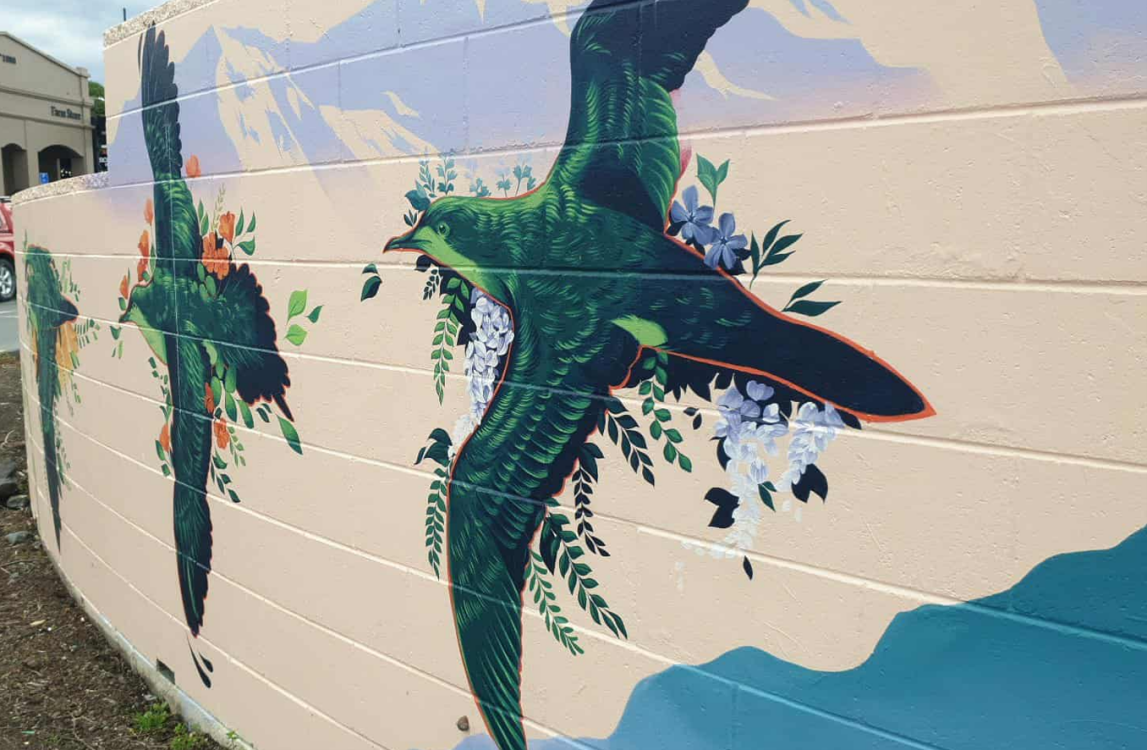
Title: The Shearwaters
Type: Mural
Location: Kaikōura Amphitheatre
Commissioned by: Kaikoura District Council
Artist: Genevieve Lintott
Contact details for artist:https://genevievelintott.com/
Genevieve Lintott’s two nature-based murals bring a refreshing sense of vitality to Kaikōura’s inner township, transforming otherwise plain concrete surfaces into vibrant expressions of the natural world. Her work, commissioned by the Kaikōura District Council, turns everyday urban spaces into immersive storytelling canvases, inviting both residents and visitors to reconnect with the landscape that defines the area. Drawing on Kaikōura’s unique setting, the murals reflect the meeting of land and sea—capturing the essence of place through flowing forms, colour, and movement that soften and enliven the built environment.
Central to the murals is the inclusion of the Hutton’s shearwater, a remarkable and endangered seabird found only in Kaikōura. Its presence anchors the artwork firmly in its local context, symbolising resilience, journey, and the deep connection between the mountains and the ocean. By weaving native species and local narratives into her designs, Lintott’s murals do more than beautify—they celebrate biodiversity, encourage a sense of kaitiakitanga (guardianship), and strengthen community pride in Kaikōura’s natural heritage.
Mountains to the Sea
Title: Mountains to the Sea
Type: Mural
Location: Jade Kiwi, West End
Commissioned by: Jade Kiwi
In the heart of Kaikōura’s West End, the Jade Kiwi shop has commissioned a striking mural depicting a collection of Kaikōura imagery: the Seaward Kaikōura Range, coastline and surf, dolphins, kōwhai and other native floral motifs, woven together with Māori-inspired patterning.
An artwork that adds vibrancy to the streetscape while reflecting the community’s deep connection to the surrounding marine environment. Dolphins are a familiar and much-loved presence in local waters, and their movement, energy, and grace are symbolic of the natural character that defines Kaikōura. The mural brings this coastal identity into the urban space, offering both residents and visitors a visual reminder of the ocean’s constant presence in daily life.
Beyond their beauty, dolphins hold significant cultural, environmental, and economic importance for Kaikōura. They are central to the town’s international reputation as a marine wildlife destination and play a key role in tourism, while also representing the community’s commitment to environmental stewardship. For many, dolphins embody a sense of guardianship and connection to the sea, reinforcing the responsibility to protect these ecosystems. In this way, the mural is more than decorative—it is a meaningful expression of place, storytelling, and pride in Kaikōura’s unique relationship with the ocean.
Whale Bone Arches
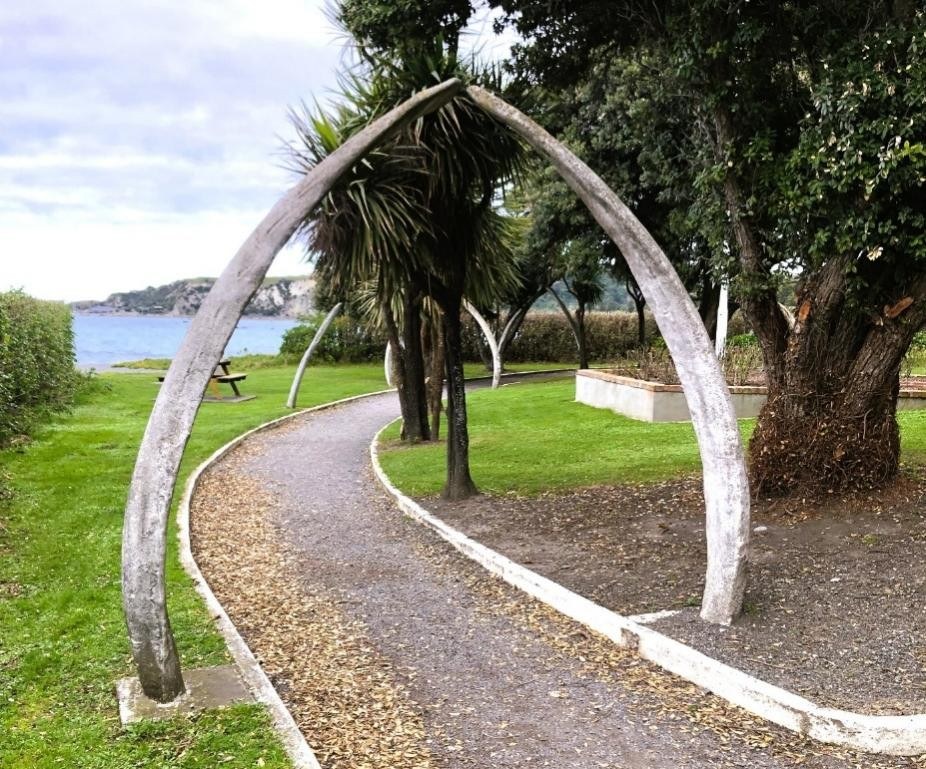
Title: Whale Bone Arches
Type: Memorial / Historic Feature
Location: Garden of Memories, Esplanade
Associated with Lydia Washington
The striking whale-bone arches lining the pathways of Kaikōura’s Garden of Memories are one of the town’s most distinctive historic features, linking Kaikōura’s maritime heritage with a remarkable story of remembrance.
The Garden of Memories surrounds Kaikōura’s war memorial, unveiled in 1921 to commemorate local people who lost their lives in the First World War. Lydia Washington devoted many years to developing and caring for the gardens, transforming the exposed coastal site into a living memorial.
Individual garden plots were created to remember significant First World War battles and events, including Gallipoli, the Somme, Passchendaele and Jutland, as well as figures such as nurse Edith Cavell and Kaikōura-born Victoria Cross recipient Thomas Cooke.
Historic whale ribs and jawbones were incorporated into the garden as arches over its pathways. Although the exact date they were installed has not been established, they became an enduring and much-loved feature of the gardens and a fitting connection to Kaikōura’s long maritime and whaling history.
Lydia Washington continued her dedicated care of the Garden of Memories for many years. In recognition of her contribution, returned servicemen erected stone entrance gates in her honour in 1939, with the Lydia Washington Gates officially opened the following year.
Today, the whale-bone arches remain an evocative part of this special place – bringing together Kaikōura’s coastal heritage and the community’s enduring tradition of remembrance.
Kaikōura Playcentre Cultural Garden
Title: Kaikōura Playcentre Cultural Garden
Type: Mural / Cultural Art & Heritage
Location: Kaikōura Playcentre, Esplanade
Commissioned by: Kaikōura Playcentre
Designed in collaboration with the Kaikōura Playcentre, with cultural advice from Te Rūnanga o Kaikōura
Mural artists: Mary and Greg Ashwell – Atawera Art
Whares: Designed and built by LMC Building
The colourful mural and two small whare at Kaikōura Playcentre tell a story that reaches much further back than the Playcentre itself.
When the former Kaikōura Primary School dental clinic was removed and the site excavated, archaeological investigations uncovered old hāngī pits and a greenstone adze. The discovery inspired the Playcentre community to recognise and celebrate the Māori heritage of the site as part of the development of its new grounds and cultural garden.
Local artists Mary and Greg Ashwell of Atawera Art created the large mural to express Kaikōura Playcentre’s relationship with the cultural, historical and environmental elements of Kaikōura. The work went on to win 1st Place for Best Professional Mural in the 2021 Resene Mural Masterpieces competition.
The cultural garden was further developed with two child-sized whare, designed and built by LMC Building & Construction in collaboration with the Playcentre. Created as places for tamariki to play and learn, the whare reflect ideas of shelter, community and connection while recognising the heritage revealed beneath the site.
The wider project was many years in the making and involved Playcentre families, local businesses and volunteers, with advice from Te Rūnanga o Kaikōura and support from Kaikōura Lions and Kaikōura District Council.
Together, the mural, whare and cultural garden create a place where tamariki can play while connecting with Kaikōura’s people, environment and the history beneath their feet.
Dusky Dolphins
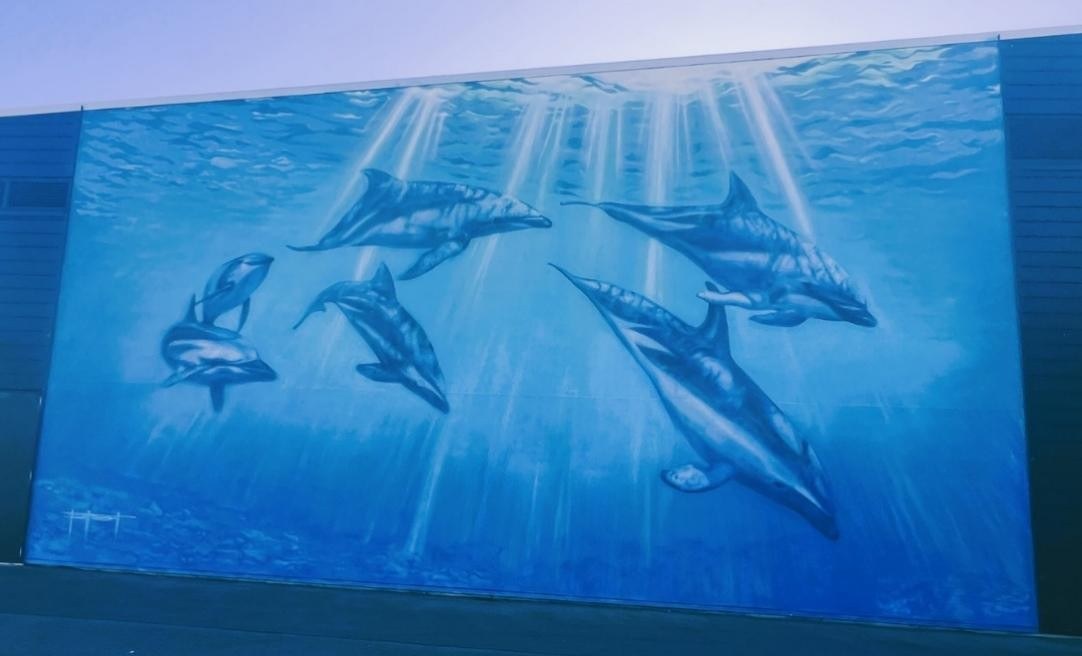
Title: Dusky Dolphins
Type: Mural
Location: Mayfair Arts & Culture Centre, Esplanade
Commissioned by: The White Morph
Artist: Bill Scott
The striking, large-scale mural stretches down the side of the historic Mayfair Theatre, bringing one of Kaikōura’s most iconic marine residents into the heart of the town. Created by renowned artist Bill Scott, the impressive 3D artwork celebrates the dusky dolphin, a species synonymous with Kaikōura’s coastal waters and world-famous marine environment. The mural captures the dolphins’ energy and agility, creating the illusion that they are leaping and swimming across the theatre wall. Playful, intelligent, and beloved by locals and visitors alike, the dusky dolphins serve as a powerful reminder of the rich marine life that makes Kaikōura such a special place.
Family Carving
Title: Family Carving
Type: Wooden Sculpture
Location: Esplanade
Artist: Gabriel Young
Carved from macrocarpa, this distinctive sculpture on Kaikōura’s Esplanade depicts a family gathered together, their forms emerging organically from the timber.
Created by Gabriel Young, the work gives new life to a familiar timber and brings art into Kaikōura’s coastal landscape. The natural form, grain and texture of the macrocarpa remain an important part of the finished sculpture, while the intertwined figures evoke ideas of family, togetherness and connection.
Set against the dramatic backdrop of sea and mountains, the carving has an almost dreamlike quality and has become an intriguing piece of public art along Kaikōura’s waterfront.
Rākaihautū – Kō & Pouwhenua
Title: Rākaihautū – Kō & Pouwhenua
Type: Cultural Artwork / Sculpture
Location: Wakatu Quay
Commissioned by: Kaikōura District Council
Designed by: Riki Manuel
Crafted by: Art Fetiche with guidance from Te Rūnanga o Kaikōura
Standing prominently within the waterfront landscape at Wakatu Quay, these two cultural artworks tell the story of Rākaihautū and his journey through Te Waipounamu.
According to tradition, Rākaihautū travelled through Te Waipounamu using his great kō, or digging stick, to carve out many of the lakes and waterways of the South Island.
This story is represented at Wakatu Quay by a dramatic kō approximately six metres high. Created from timber and corten steel, the kō is angled into the ground and positioned within the site's rain garden. Its placement connects the cultural story with the movement of water through the landscape, while split rock detailing anchors the sculpture to the whenua.
Nearby stands a second monumental work – a pouwhenua representing Rākaihautū himself. Rising approximately six metres from its plinth, the pou is formed from concrete and corten steel and is positioned looking towards Matariki.
Together, the kō and pouwhenua bring the story of Rākaihautū into the contemporary Wakatu Quay landscape, creating a powerful connection between people, whenua, water and sky.
The artworks were designed by master carver and artist Riki Manuel and crafted by Art Fetiche, with guidance from Te Rūnanga o Kaikōura. They form part of the cultural artwork trail extending through Kaikōura, sharing the stories, history and traditions of Ngāti Kurī through contemporary public art.
Pou Tangaroa
Title: Pou Tangaroa
Type: Pou / Cultural Artwork
Location: Fyffe House
Carved by: Makarini Solomon (Ngāti Kurī) in 2002
Standing prominently on the high ground behind Fyffe House, Pou Tangaroa is a marker of the deep cultural history of Wai o puka and the generations of people who have called this place home.
Wai o puka has been occupied by Māori for centuries and is an important cultural landscape. Waitaha were followed by Ngāti Māmoe and later Ngāti Kurī, who are mana whenua in Kaikōura today. Archaeological evidence found in the area reflects its long history of occupation and use.
Installed in 2002 and carved by Ngāti Kurī, the pou is named for Tangaroa, atua of the sea. Its commanding position overlooking the coast reflects the strong relationship between the people of this place and the ocean that has sustained generations through fishing, gathering kai and, in later years, whaling.
Pou Tangaroa also represents the dual heritage of the Wai o puka site. Below it stands Fyffe House, the oldest surviving building in Kaikōura and a remnant of the shore-whaling station established here in the 1840s. Remarkably, the earliest part of the house rests on foundations made from whale vertebrae.
Together, Pou Tangaroa, the surrounding landscape and Fyffe House tell a layered story of Wai o puka – connecting centuries of Māori occupation with Kaikōura's later whaling and European settlement history.
Our Ocean, Our Taonga
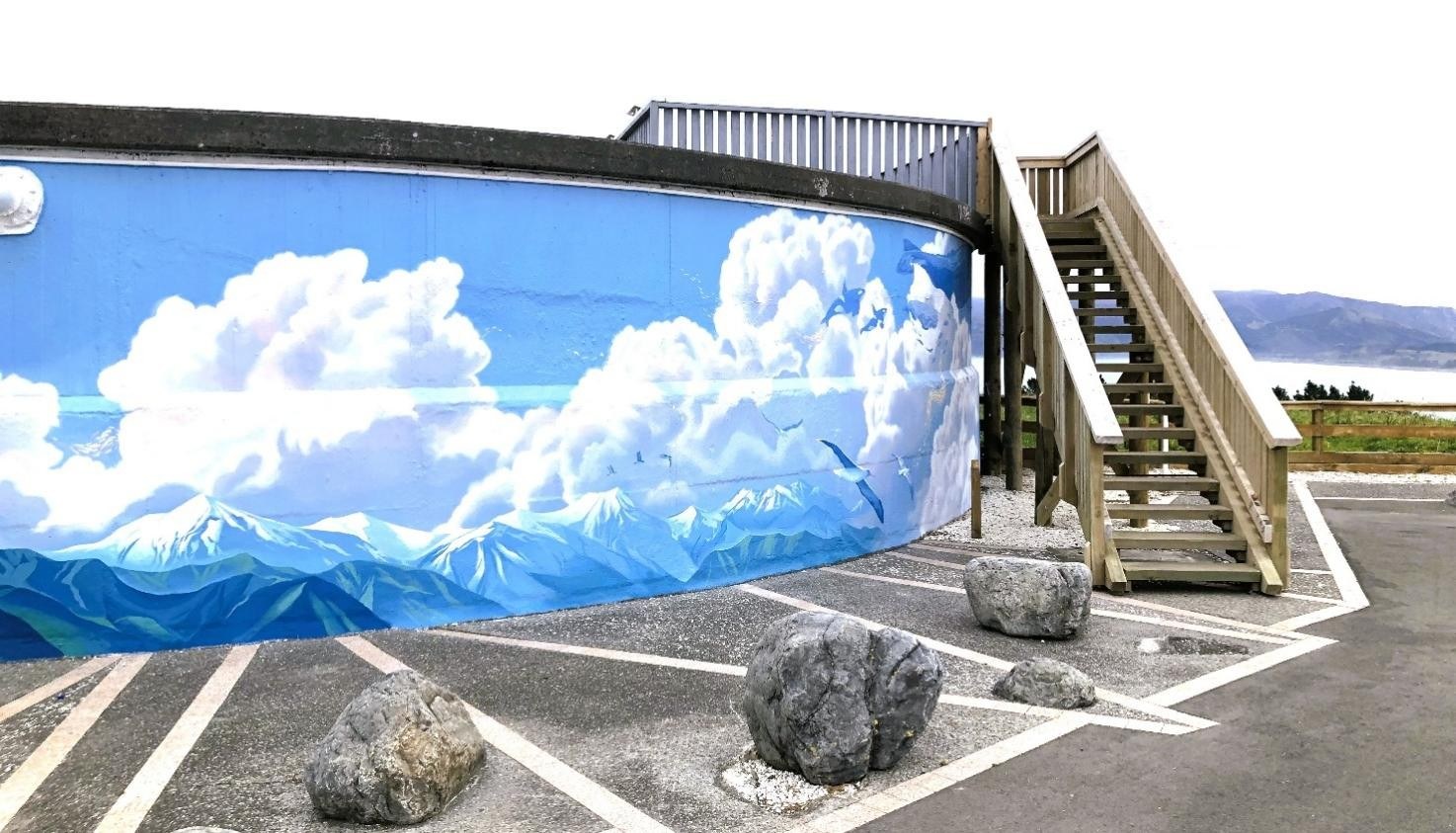
Title: Our Ocean, Our Taonga
Type: Mural
Location: Kaikoura Lookout
Commissioned by: Encounter Foundation
Artist: Genevieve Lintott
Contact details for artist: Genevieve Lintott | Muralist & Artist
The vibrant new mural created in 2026 by young local artist Genevieve Lintott on the Kaikōura Lookout water tank is a stunning addition to the landscape. It sits in perfect harmony with the sweeping panoramic views of mountains and ocean that make the town lookout so iconic.
Inspired by the natural beauty and unique character of Kaikōura, the artwork brings colour, creativity, and a strong sense of place to one of the town’s most visited viewpoints. The mural celebrates the connection between community, culture, and environment, while creating a memorable backdrop for visitors stopping to take in the breathtaking view.


